MAIZ (Corn)
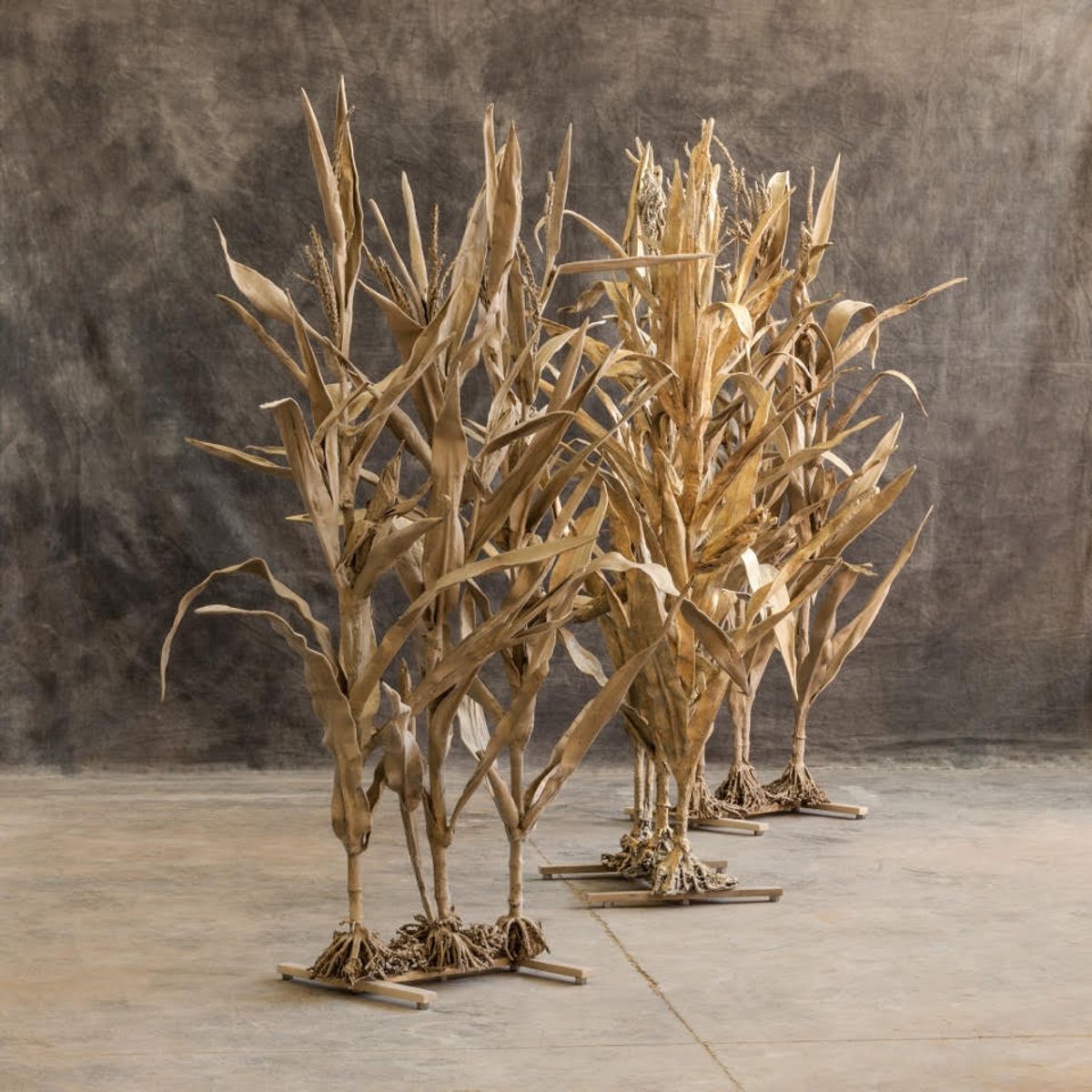
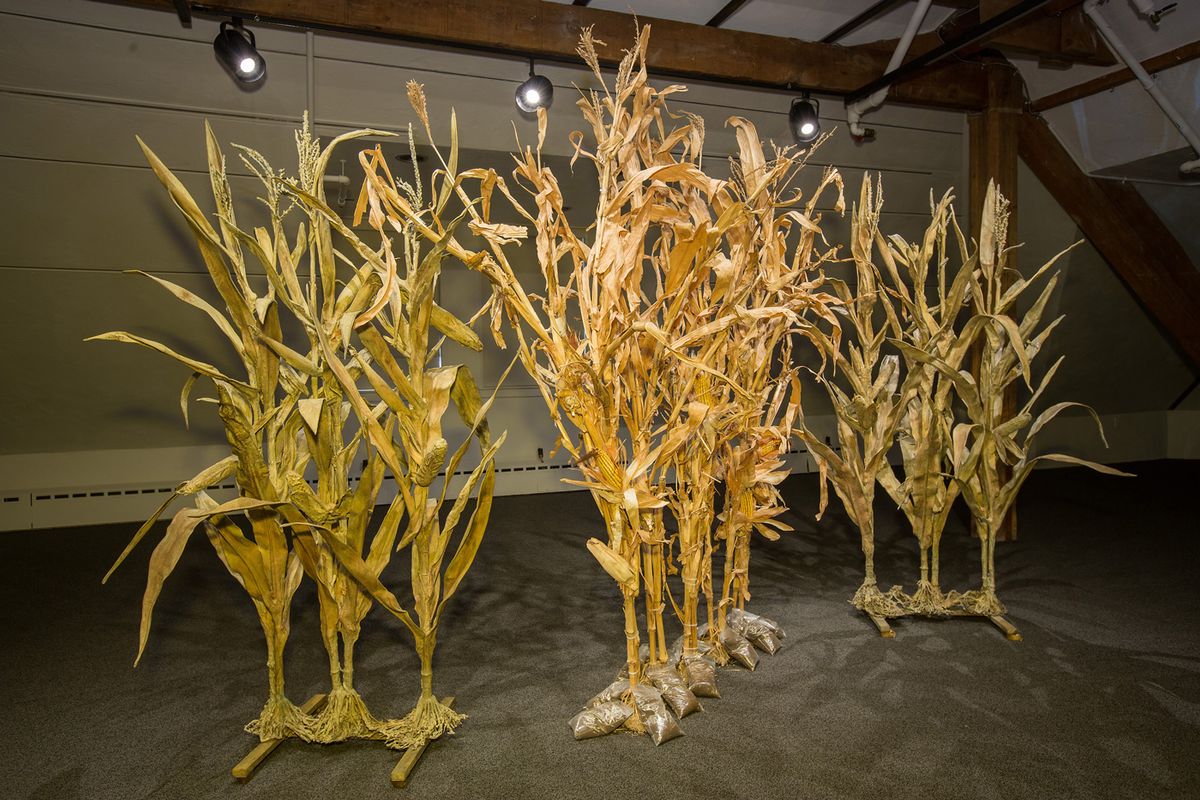
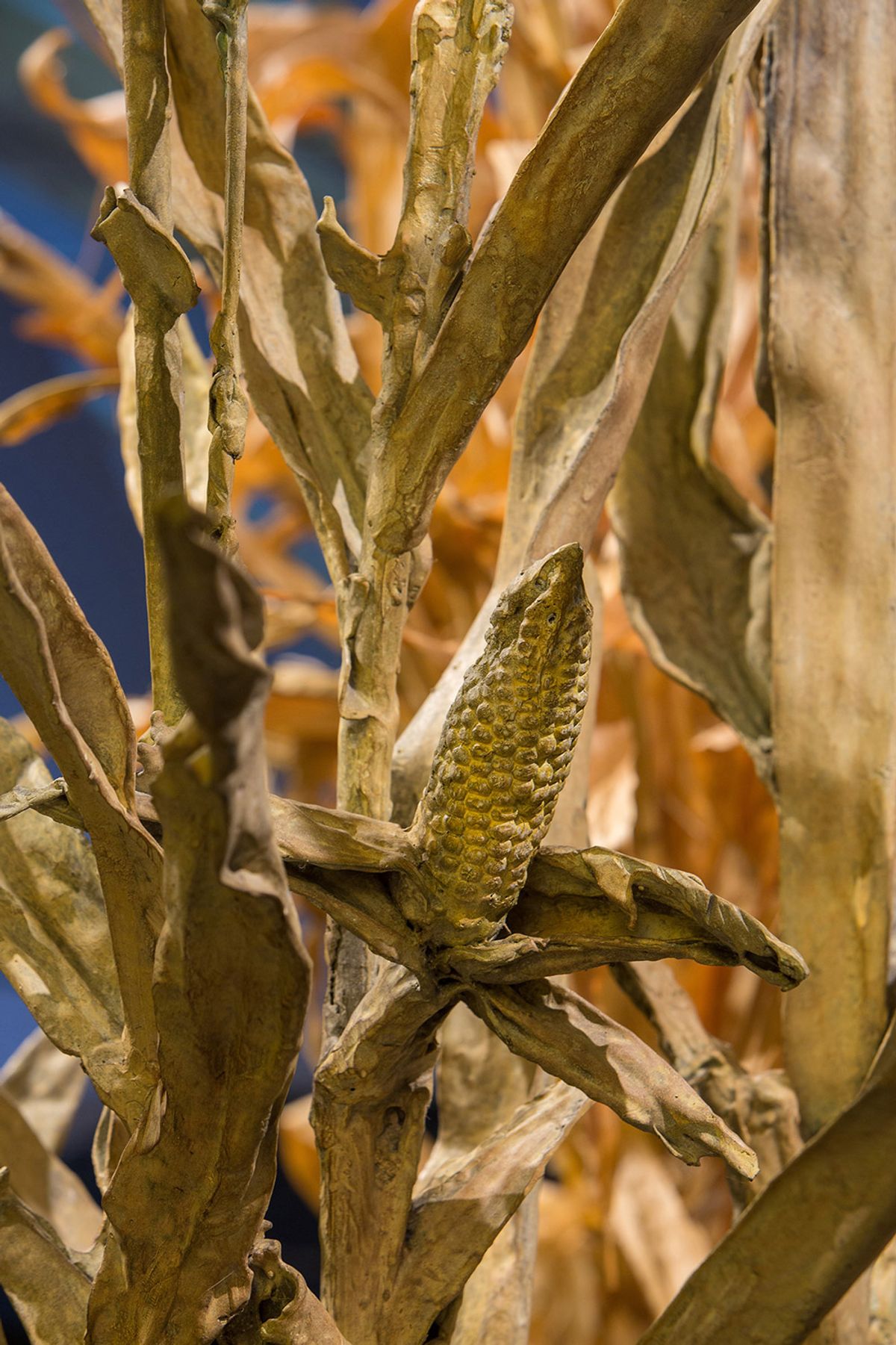
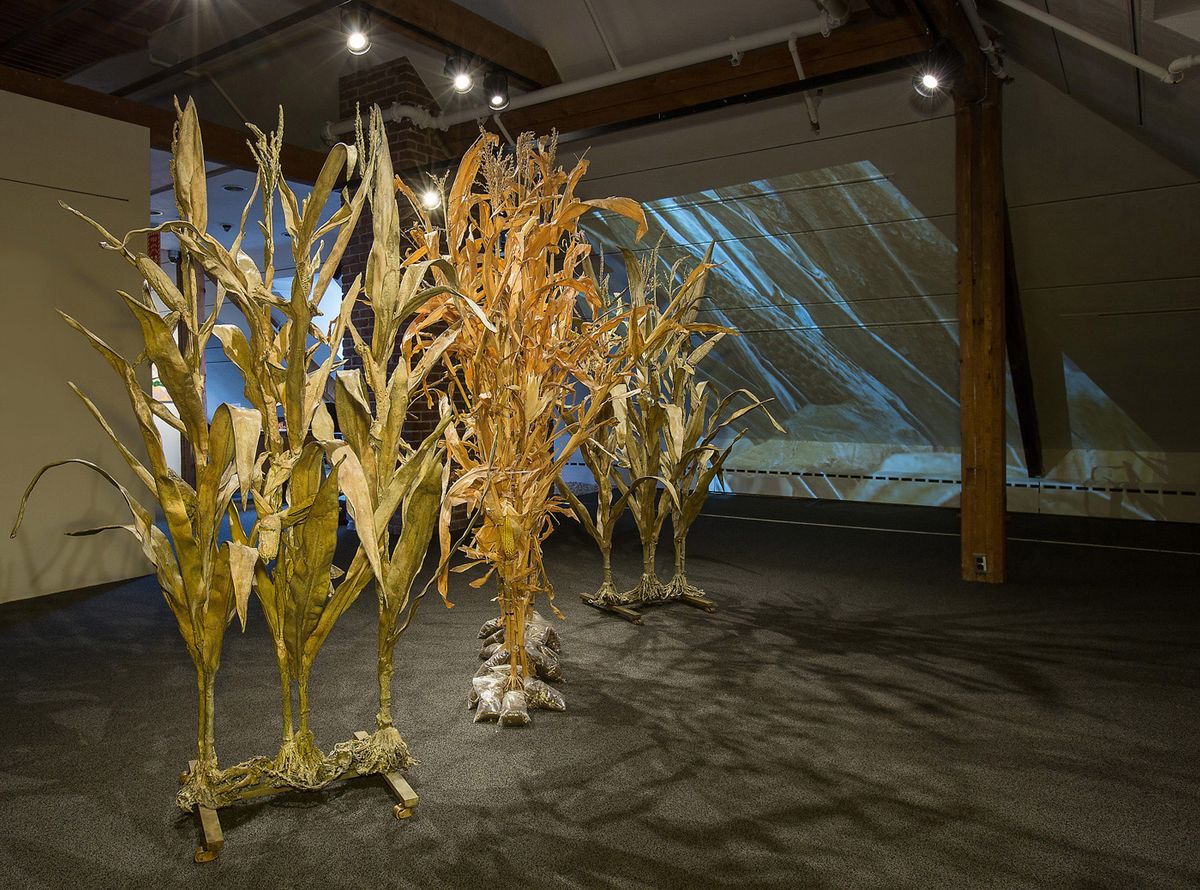
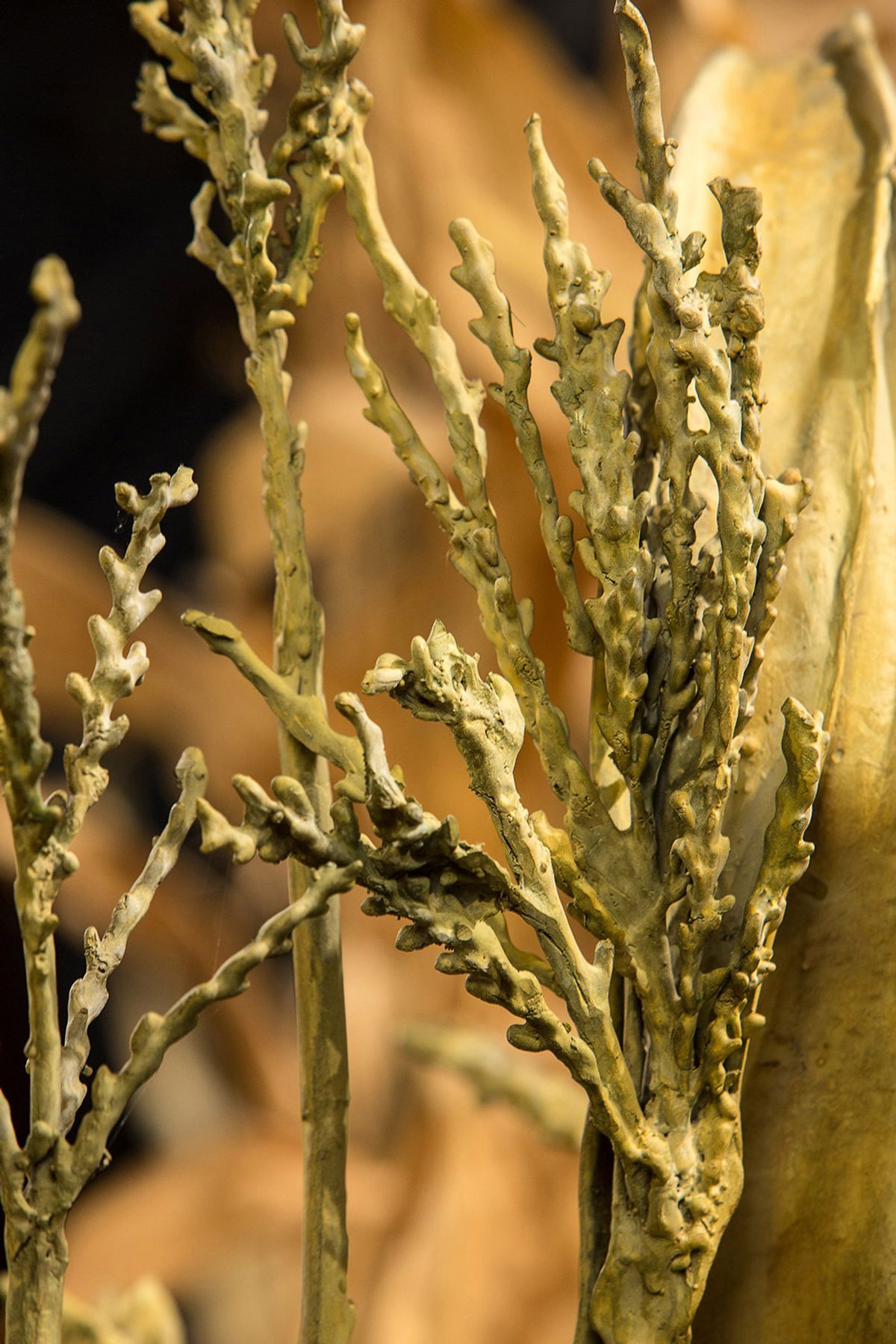
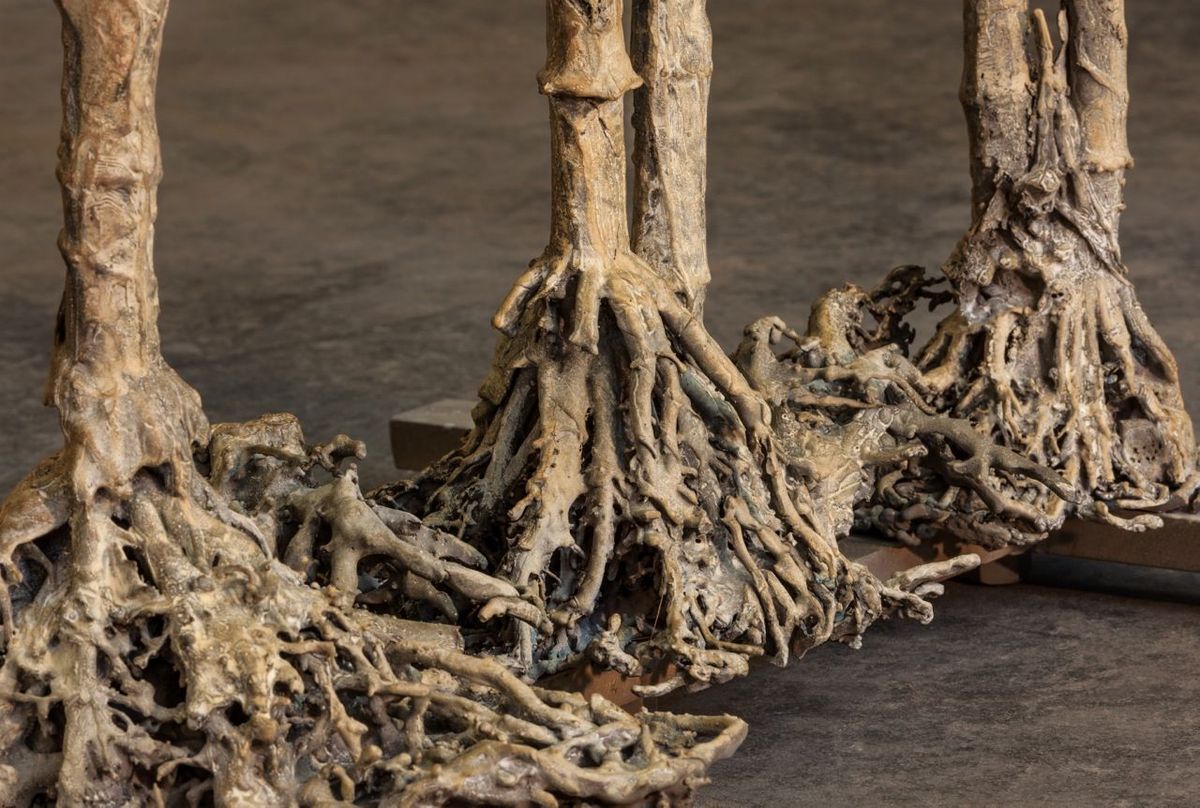
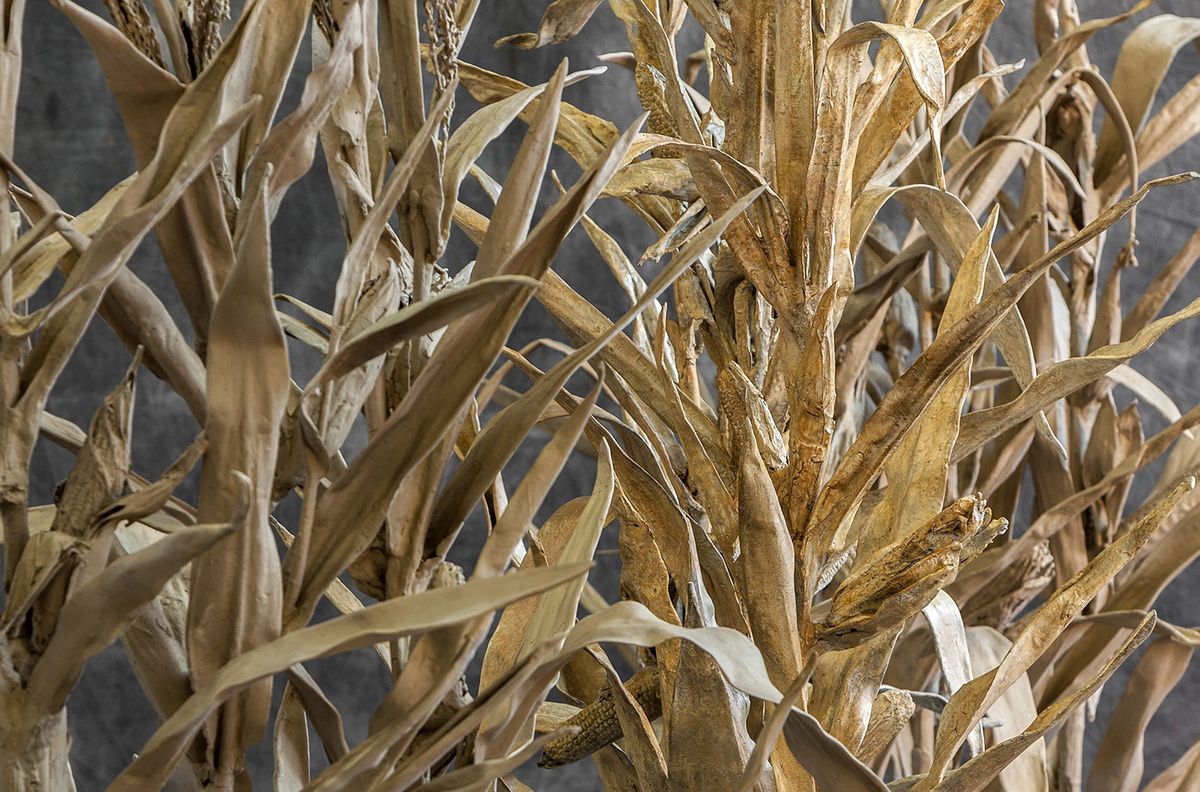
Contemporary corn plants carry material histories within their stalks and cobs. Corn provides the foundation for much of the world’s agricultural industries and each plant is a product of centuries of genetic manipulation. Native to the Americas, the plant called mahiz was an agricultural staple for the Indigenous Taíno peoples. In the 16th century, Spanish invaders colonized the Americas, laying waste to Indigenous cultures through colonization and the spread of disease. Yet maiz (the Spanish term for mahiz) survived and flourished, and today, known a corn, it is one of the most ubiquitous crops harvested for human and animal consumption on the planet. At first glance, Santini’s sculptural installation “Maiz” presents three stands of golden corn that seem to be growing out of the gallery floor. Upon closer inspection, however, it becomes clear that these naturalistic forms have been cast in bronze, a medium long associated with Classical, Western ideals. The sculpture adopts a hybrid stance, suggesting a fluid connection between past and present cultures. While acknowledging the cultural devastations of European colonialism and industrial incursions on nature, Maiz also makes an aesthetic appeal. Elegant in their earthy simplicity, these sculptural stalks of corn speak to deep, material bonds between historically and culturally diverse traditions and practices. Location: 3680 de la Montagne Building Complex, Montréal, Canada Institut de Recherches Cliniques de Montréal (IRCM), Montréal, Canada
- Material
- bronze, copper
- Date
- 2020
- Dimensions
- 222 x 500 x 110 cm